
The Ministry of Industry and Information Technology and the Cyberspace Administration of China unveiled a guideline recently to accelerate the application and industrial development of blockchain technology.
According to the guideline, the country's blockchain industry is expected to reach an advanced level globally by 2025, with related applications penetrating daily life.
A number of well-known blockchain products, especially in product traceability, data circulation and supply chain management, should be available by then.
Yu Jianeng, deputy director of the blockchain specialized committee of the China Communications Industry Association, said: "Only when blockchain technology is applied in various industries can it fully play its role and unleash the real value. It can also become an important driver of the nation's industrial innovation."
Blockchain is a specific type of database where all clients can share data yet no one can adjust or erase any exchanges. It is, therefore, lauded for its safety, security and transparency, and has promising applications in facilitating trade.
At present, a number of blockchain applications have emerged in fields like anti-counterfeiting traceability, government data sharing, and people's livelihood services, all of which have a good foundation for further development.
China has started setting standards for blockchain. For example, last year the central bank issued one on distributed ledger security, and the local governments are working on some regional standards.
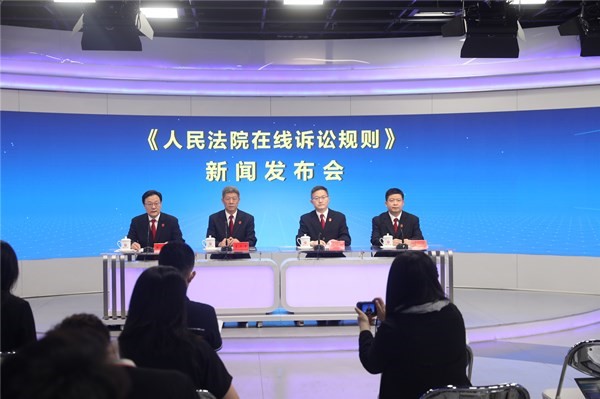
On 17 June 2021, the Supreme People's Court ("SPC") held a press conference to announce the release of the Rules of Online Litigation of People's Court ("the Rules"). The Rules are judicial interpretations formulated by the SPC and have legal effect, which will apply to more than 3,500 courts across the country and take effect on 1 August 2021.
Stepping into the 21st century, Chinese courts have started to explore the application of digital technology in judicial practice because China's digital economy is developing so rapidly that it urges the development of the rule of law in the cyberspace. From online case filing, electronic case files, online payment and video hearings, to establishing the first internet court in the world and using blockchain to store evidence, Chinese courts have been continuing to broaden the scope of applications of online litigation.
Specifically, the Rules the SPC released regarding the blockchain:
Affirm the scope of validity of blockchain evidence and clarify the correspondent standard of review: Based on the characteristics of blockchain technology, the Rules presume that electronic evidence recorded on blockchain has not been tampered with. The Rules further illuminate how to review the authenticity of electronic evidence recorded on blockchain and how to determine whether any electronic evidence has already been altered before being registered on blockchain. It is believed that blockchain evidence will bring greater transparency, enhanced security, improved traceability, and increased efficiency for online litigation in China. Obviously, the Rules are laying the very foundations for recognizing the authenticity of blockchain evidence in court, which is a major breakthrough even in the world.
Source:
http://english.court.gov.cn/2021-06/18/content_37545136.htm (English)
https://www.chinadaily.com.cn/a/202106/09/WS60c0184aa31024ad0bac481b.html
(English)
https://www.scmp.com/tech/tech-trends/article/3136515/china-plans-accelerate-
blockchain-development-and-adoption-push (English)