

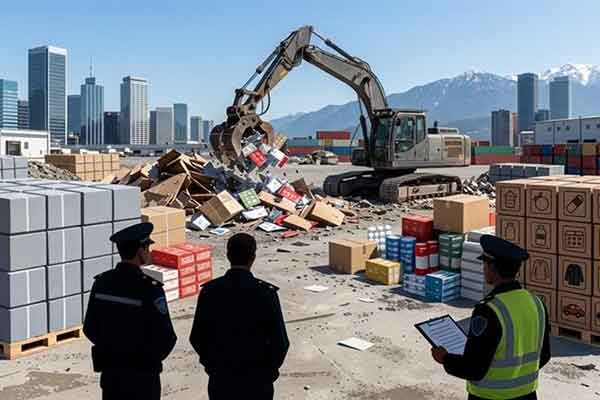
Over 500 tons of infringing, counterfeit and substandard goods destroyed
On 12 March 2026, authorities in the Xinjiang Uygur Autonomous Region launched a large-scale destruction campaign targeting infringing, counterfeit, and substandard goods. Coordinated by the regional Market Supervision Administration together with the Urumqi Municipal Market Supervision Administration and the Urumqi Public Security Bureau’s Food, Drug, and Environmental Crime Investigation Division, the campaign was rolled out across more than 90 counties and cities, reflecting a genuinely region-wide enforcement effort.
The goods destroyed had been seized by market supervision authorities at different levels since 2025, as well as in cases concluded in the first quarter of 2026. In total, more than 500 tons of goods with an estimated value exceeding RMB 31.2 million were destroyed, covering 22 major categories and over 300 subcategories. These included food and beverages (such as alcohol and meat products), pharmaceuticals, cosmetics, medical devices, auto parts, clothing and footwear, measuring instruments, alcoholic beverages, agricultural supplies, building materials, and daily necessities. Notably, the operation targeted counterfeit food and drinks, fake and substandard medicines, non-compliant medical devices, children’s toys lacking mandatory 3C certification, counterfeit branded clothing and footwear, fake fertilizers and agricultural films, auto parts posing safety risks, and substandard daily chemical products – goods that are closely linked to everyday consumer health and safety.
From a brand protection perspective, this campaign underlines China’s continued “zero tolerance” stance toward counterfeit and unsafe goods and confirms that local enforcement authorities are prepared to take visible, large-scale action where infringement intersects with consumer safety. Rights holders active in China should ensure that their portfolios, evidence collection, and cooperation mechanisms with local regulators are robust, so they can effectively support and benefit from similar enforcement initiatives.
Source:
https://www.samr.gov.cn/xw/df/art/2026/art_6f3f7df208754602ab50002eca50d37d.html (Chinese)